Italian Verb Conjugations
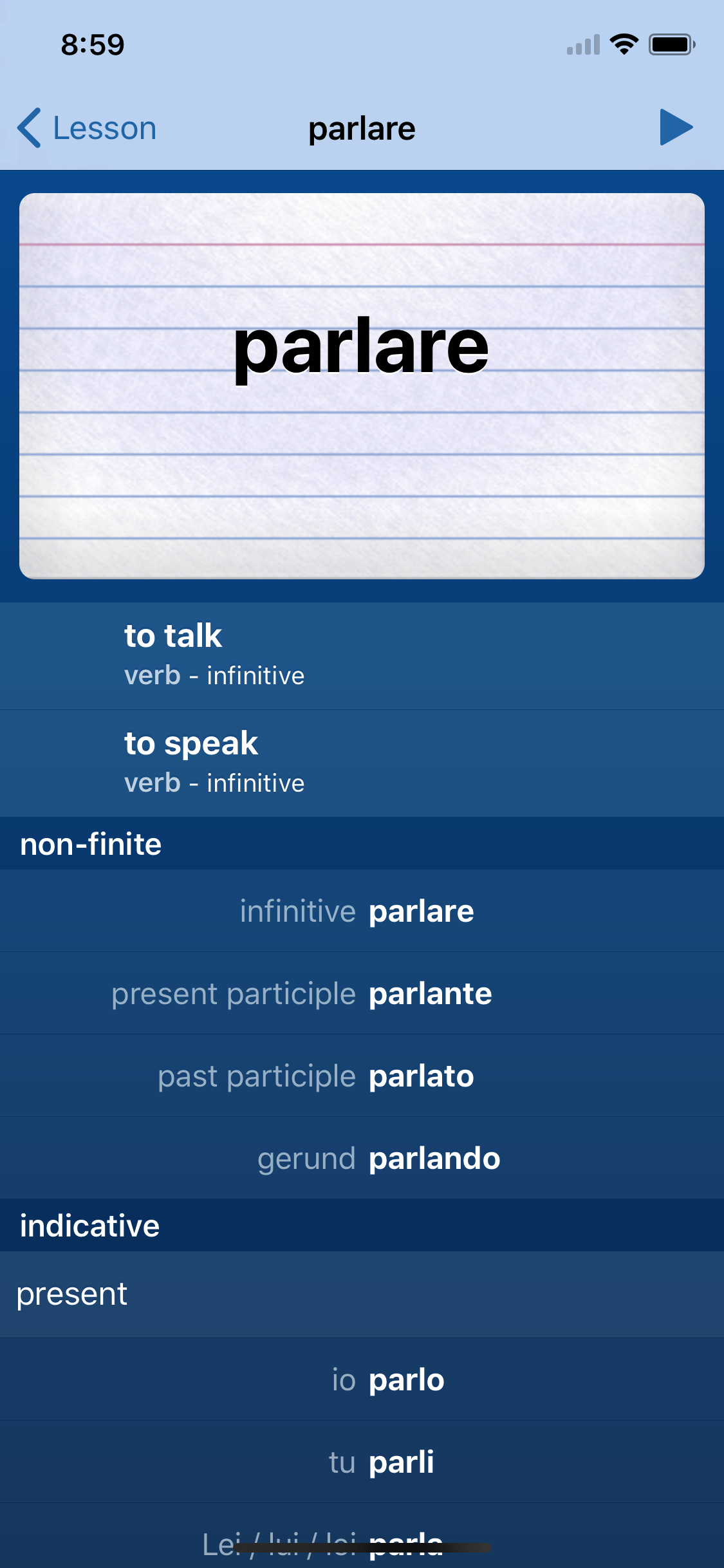
Italian verbs change form based on tense, mood, person and number. These changes are called conjugations.
Tenses and Moods
Non-Finite
Infinito
Participio Presente
Gerundio
Participio Passato
Indicative
Presente
Imperfetto
Futuro
Passato Remoto
Subjunctive
Congiuntivo Presente
Congiuntivo Imperfetto
Other
Condizionale
Imperativo
Verbs Change by the Person
Verb forms change depending on who or what is the subject of the action. In grammatical terms, this is referred to as "person".
For example, if I am the subject of the verb, the verb takes a "first-person" form. If you are the subject, the verb takes a "second-person" form.
Below are the six different person types along with the Italian subject pronouns of those persons.
| First Person | |
|---|---|
| io | I |
| Second Person | |
| tu | you (informal) |
| Third Person | |
| lui | he (conversational) |
| lei | she (conversational); you (formal) |
| First Person Plural | |
| noi | we |
| Second Person Plural | |
| voi | you (plural) |
| Third Person Plural | |
| essi | they (masculine); they (neutral) |
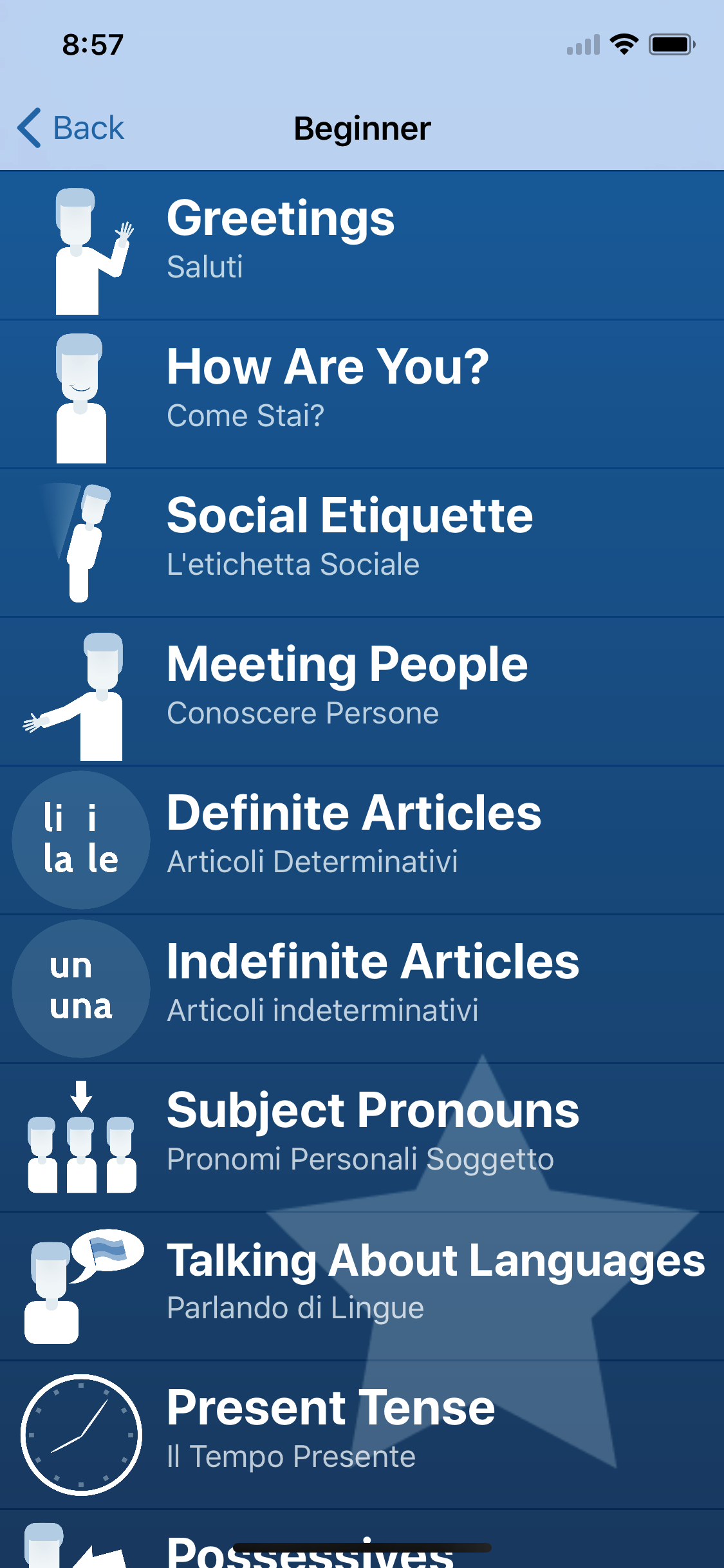
Molto Bene Italian
Subject Pronouns
Learn Spanish by Qué Onda
Learn French by Très Bien
Learn Italian by Molto Bene
Learn Portuguese by Tudo Bem
Learn Hebrew by Ma Kore
Learn German by Wie Geht's
Online English Help
Online Japanese Help
Online Arabic Help
Online Russian Help
Online Chinese Help
Online Korean Help
Online Turkish Help
Online Hindi Help
Online Greek Help